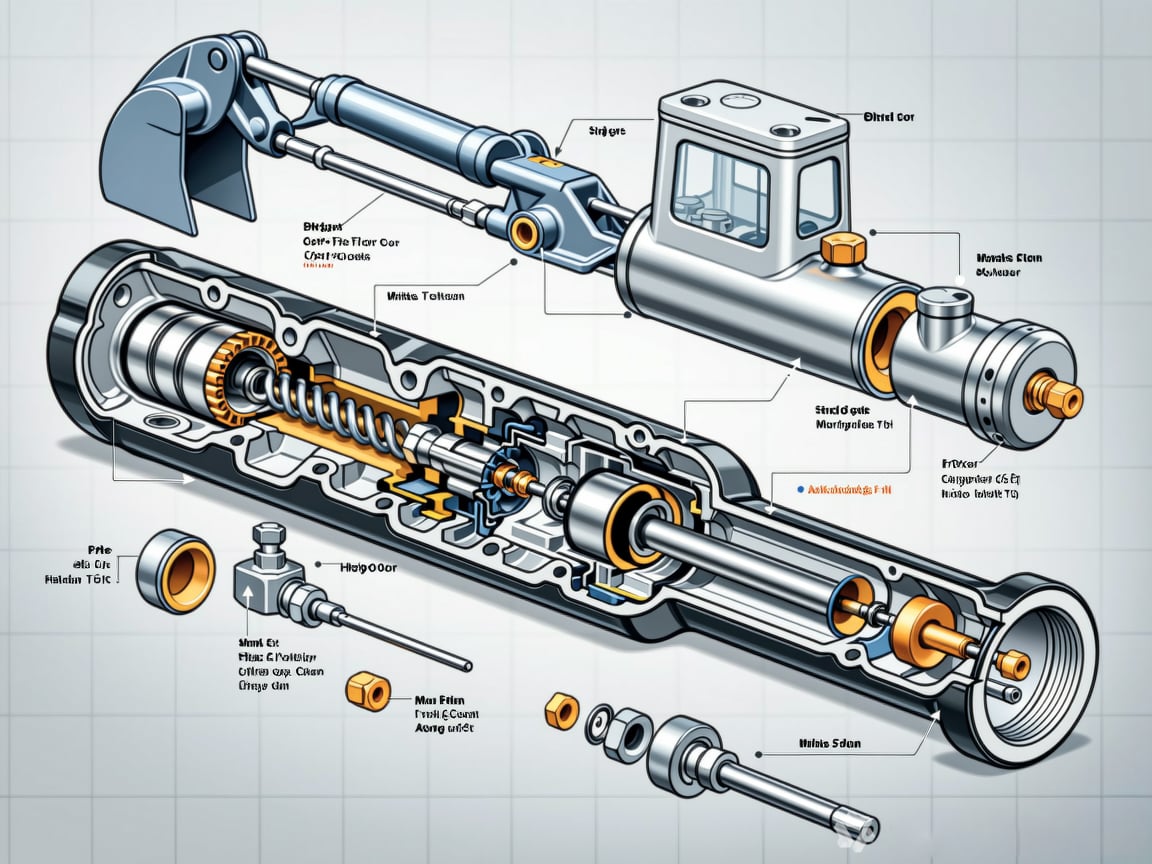
A precise selection methodology from "universal substitution" to "one machine, one policy"
Introduction:
Too many repair sites operate like this: remove the old seal, take it to a parts store for comparison, and then take back the 'similar sized' one for installation. It may be usable in the short term, but it is a hidden danger in the long term.
The most common and dangerous selection logic in the industry is to treat seals as standard components rather than system level failure prevention and control units.
1、 High temperature and high pressure mining conditions: not "sufficient pressure resistance", but "anti extrusion+anti thermal aging" dual rigidity guarantee
Typical scenarios: Ordos coal mine in Inner Mongolia, Yunnan phosphate crushing station, excavator boom/forearm oil cylinder continuously subjected to 31.5-40MPa instantaneous pressure, oil temperature maintained at 70-85 ℃ throughout the year, dust concentration>12mg/m ³.
Typical failure phenomenon:
Radial microcracks (thermal aging cracks) at the sealing lip;
The metal framework is squeezed into the groove gap under high pressure ("burst opening");
The dust ring hardens and loses elasticity and cannot follow the axial micro-displacement.
The actual measurement shows that the leakage rate of the equipment with ordinary NBR seal is increased by 300% compared with the standard condition, and the replacement frequency is 5.2 times of the normal condition.
Failure mechanism:
High temperature breaks the molecular chains of NBR rubber, and the compression permanent deformation rate rises sharply; The high pressure pulsation causes the unsupported seal body to creep toward the low pressure side; Dust particles are embedded in the lip to form stress concentration points and accelerate cracking.
Precise selection scheme:
✅ Main sealing material: H-NBR (hydrogenated nitrile rubber) or FKM (fluorine rubber) two-component composite rubber material-H-NBR compression permanent deformation ≤ 15% at 180 ℃, while FKM has better chemical stability and compression permanent deformation resistance.
✅ Structural design: the stepped double-lip piston seal (Glae ring+Stemming seal combination) with mandatory support ring, the thickness of the support ring ≥ 1.2mm, and the groove fit clearance is optimized to 0.02 – 0.03mm to eliminate the risk of "explosion" structurally.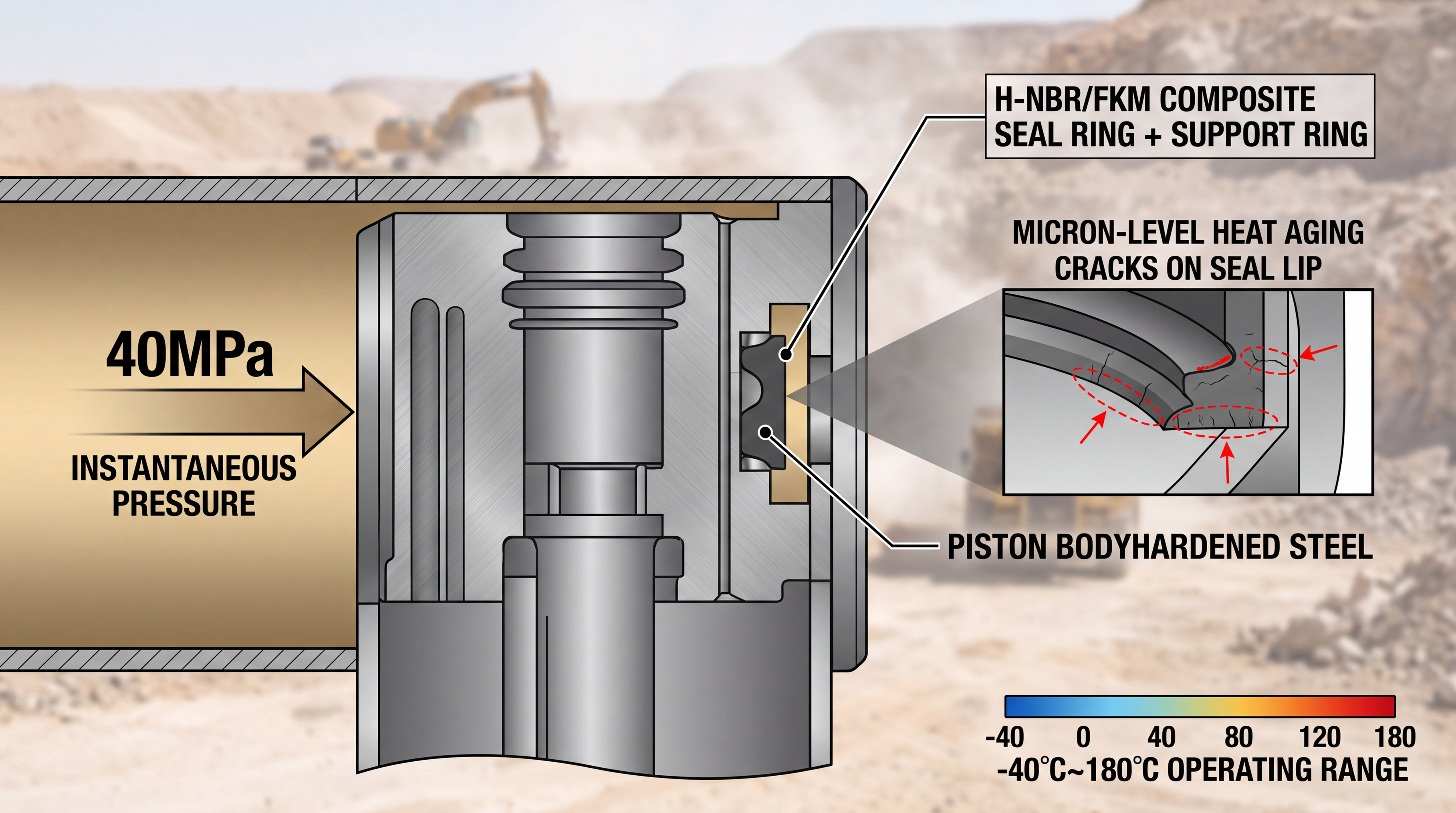
2、 Extremely cold and frequent cold start condition: not only "cold-resistant", but "elastic recovery rate+structural design" double-threshold guard
Typical scenes: Heilongjiang Mohe and Xinjiang Altay in winter, with ambient temperature as low as - 40 ℃, equipment shutdown at night, cold start in the morning, "jamming" of control valve and slow action of oil cylinder.
Typical failure phenomenon:
The low temperature embrittlement of lip generates microcracks, and the oil leakage rate of the first day reaches 38%;
Elastic recovery rate<65%, resulting in insufficient preload of sealing interface;
Excessive rigidity of lip during installation may lead to flanging or tearing, which shall be repaired within 72 hours.
Failure mechanism:
Glass transition of ordinary NBR below - 30 ℃, molecular chain freezing, loss of elastic deformation capacity; Under the cold state, the difference between the thermal expansion coefficient of metal skeleton and rubber increases, which causes the interface stripping; Further stress amplification by shaft unbalance vibration.
Precise selection scheme:
✅ Main sealing material: special low-temperature TPU formula (Shore A70 ± 3) or fluorosilicone rubber (FVMQ) must be selected - TPU compression permanent deformation ≤ 12% at - 40 ℃, while FVMQ has both - 60 ℃ ultra-low-temperature elasticity and 180 ℃ high temperature resistance.
✅ Structure design: adopt flexible structure without metal skeleton+lip chamfer R0.15mm stress reduction design+reduce pre-compression to 15%, avoid cold brittleness fracture risk from the source.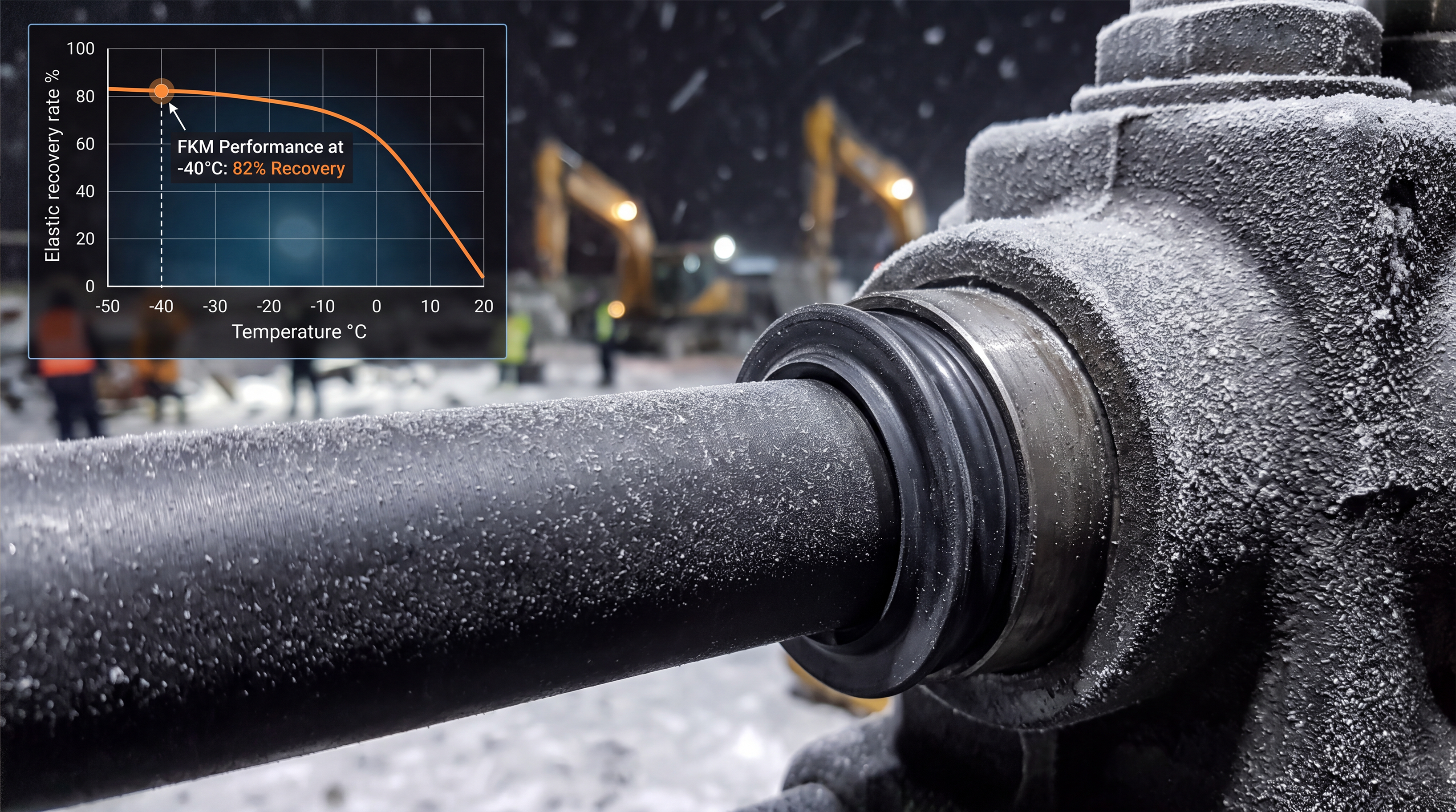
3、 Salt spray corrosion+mechanical scraping condition: not "anti-rust coating", but "three-layer physical isolation" three-dimensional defense
Typical scene: Ningbo Beilun Port and Zhanjiang Port shore bridges, exposed parts of large-arm oil cylinder are exposed to marine salt mist (pH ≈ 5.6) all the year round, surface of chrome-plated rod shows pitting corrosion, and sand particles (D50=18 μ m) scrape at high speed
Typical failure phenomenon:
The outer dust ring swells and falls off, and the main seal lip is scratched;
The stainless steel framework is subject to electrochemical corrosion, and the strength is reduced by 30%;
The leakage amount reaches 12mL/min after 2000h of salt spray, Times of out-of-limit value.
Failure mechanism:
Cl ion in salt mist penetrates the rubber surface and forms primary cell accelerated corrosion with metal framework; Sand particles slide at high speed on the rod surface, causing abrasive wear on the lip; The single-layer dust-proof structure cannot establish effective pressure gradient, and impurities directly reach the main seal interface.
Precise selection scheme:
✅ Dust-proof system: must adopt triple redundancy design - outer layer thickened polyurethane scraper ring+middle layer dust separation lip+inner layer spiral guide slot to form labyrinth barrier with pressure gradient > 0.8MPa.
✅ Main seal structure: fluororubber (FKM) main body+framework electroplated nickel-phosphorus alloy (thickness ≥ 25 μ m), nickel-phosphorus layer is dense and non-porous, blocking Cl permeation path.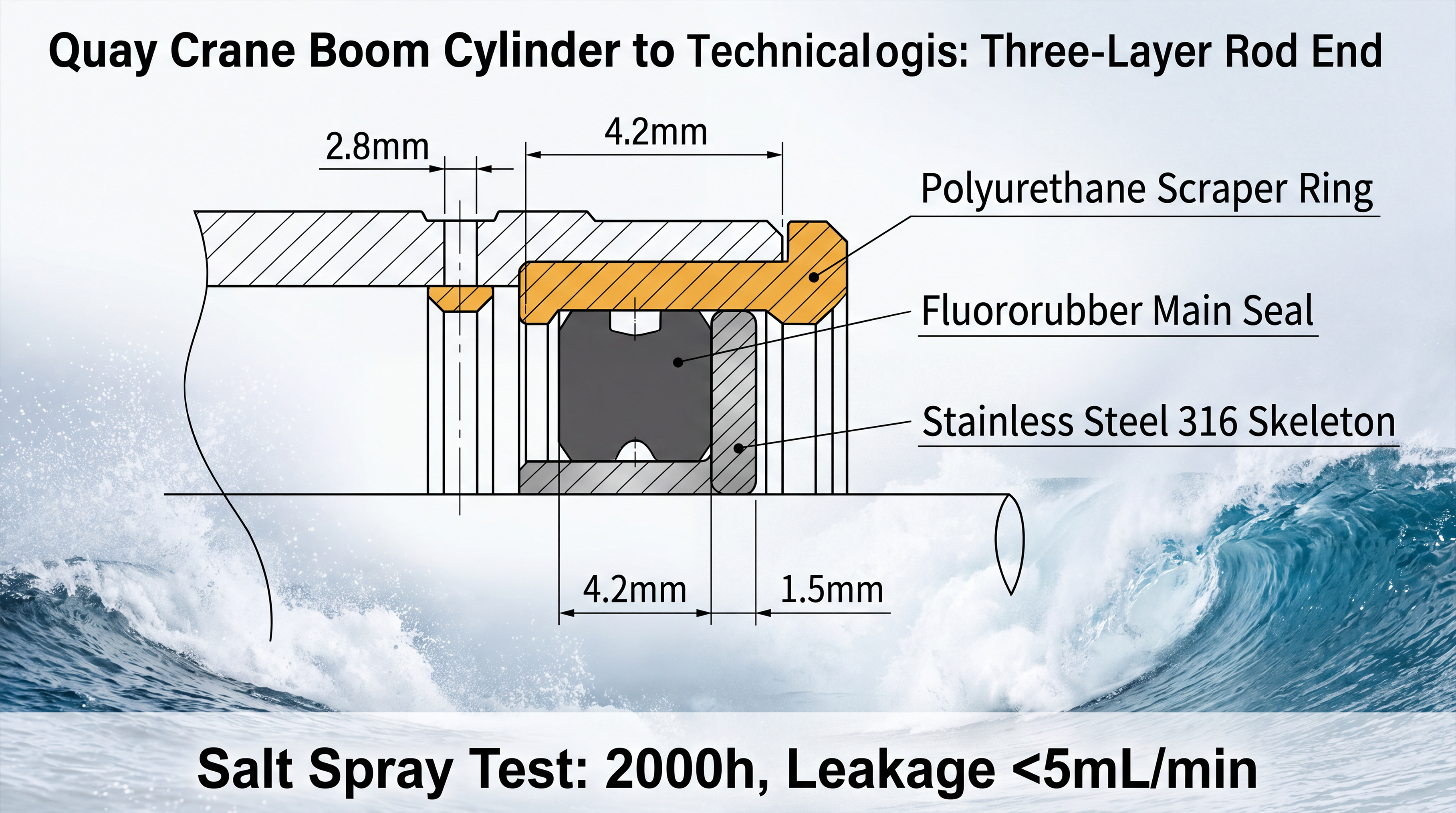
4、 High dust+mud immersion condition: not "thickened dust", but "scraping - intercepting - diversion" all-link particle control
Typical scene: Guizhou tunnel tunneling, Hebei steel plant slag yard, dust particle size concentrated in 5 – 50 μ m, mud solid content>35%, long-term semi-immersion operation of equipment.
Typical failure phenomenon:
The dust ring is blocked and fails, and particles on the main seal interface are embedded;
Wearing of lip abrasive grain, and the depth of drag mark on the rod surface reaches 0.08mm after single operation;
The service life is shortened to 1/3 of the normal working condition.
Failure mechanism:
The fine particles form a suspension in the hydraulic oil and repeatedly scour the lip with the piston movement; Hard particles in mud (such as iron oxide and quartz) form furrow effect on the rod surface; A single layer of dust prevention can not deal with the compound pollution of high concentration and wide particle size distribution.
Precise selection scheme:
✅ Dust-proof system: Scraper-type polyurethane mudguard ring+middle dust separation lip+inner spiral guide groove must be adopted to realize three-level control of "scraping - intercepting - guiding"
✅ Primary seal material: nano-aluminum oxide=reinforced PU piston seal – Mohs hardness up to 7.2, abrasion resistance 6.3 times NBR and excellent hydrolysis resistance in mud environment.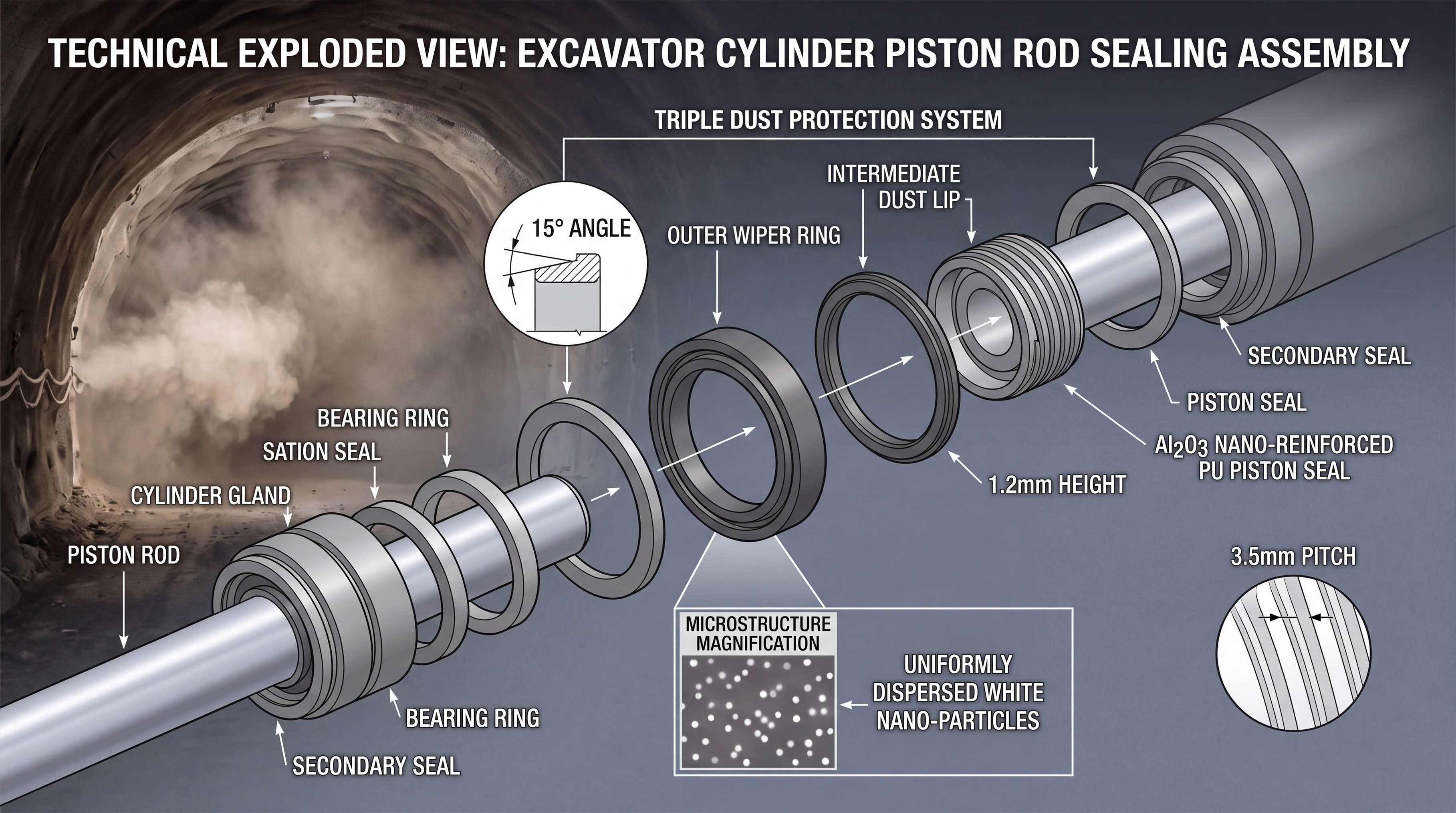
Each failure of the seal is not a material defection, but a sharp whistle for system-level risk warning; Each accurate model selection is not the mechanical matching of parameters, but a solemn commitment to the health of the whole life cycle of the equipment.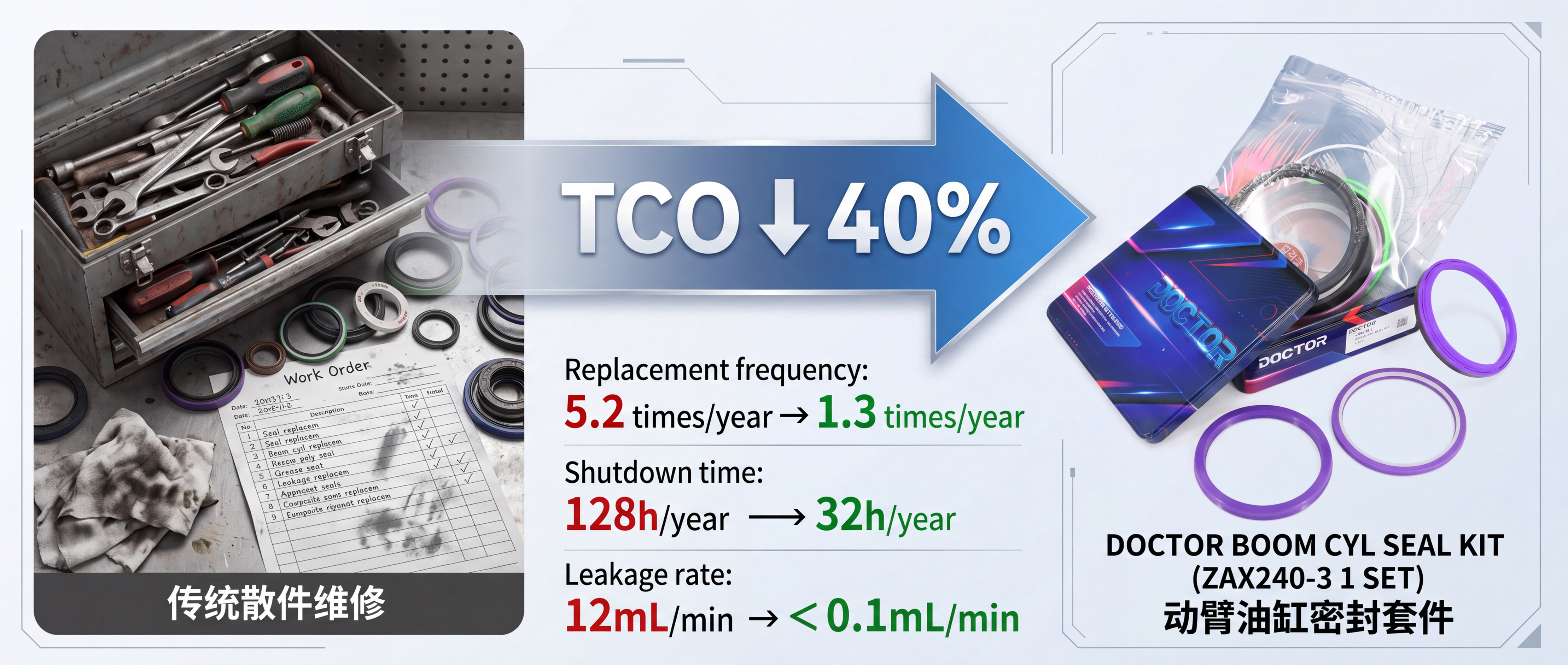
 Hot News
2026-09-01
2026-08-26
2025-09-01
2025-09-02
2025-09-04

Welcome to SONGZ, a leading expert in sealing components in China! We provide high-quality and efficient sealing solutions, covering hydraulic seals, sealing kits, pneumatic seals, oil seals, O-rings, and more.
Bullding A, Guangzhu Business Bullding, No.1190, Zhongshan Avenue Middle, Tianhe District, Guangzhou, Guangdong Province, China.
Copyright © Songzheng Seal (Guangzhou) Co., Ltd. All Rights Reserved Privacy Policy
 EN